
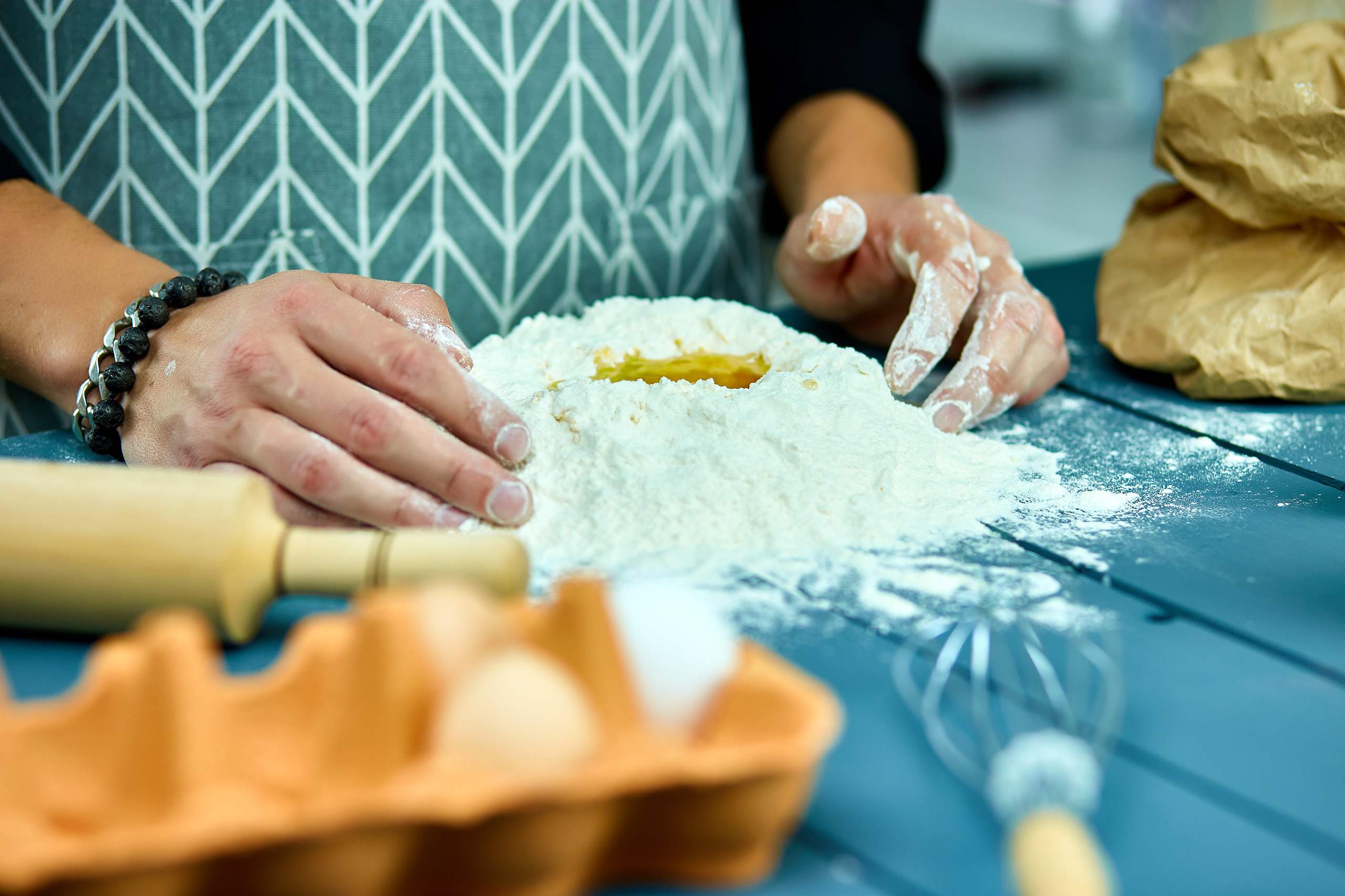
Bread baking is a very ancient skill and continues to be one of the most interesting and modern skills. Behind every bread loaf, there is a precise and organized process of converting raw materials into bread. This might look simple, but in fact it is a craft with a lot of structure and technique that combines science, time, and skill.
The process starts with selecting the ingredients: there are all sorts of flour, all with different levels of protein (gluten), water of different qualities and temperatures, as well as salt, all these are very important because they directly influence the quality of the flour, gluten formation, fermentation, and flavor of the bread.
Mixing and kneading are the next steps in the bread-making process. This step develops gluten, which creates the structure and texture of the bread. The dough is worked until it is smooth and elastic, developing a strong gluten network. This step requires skill and precision to avoid under- or overkneading, which can affect the final product.
Fermentation is a crucial step in the bread-making process, where the yeast activates and begins to convert sugars into carbon dioxide and alcohol. This process creates the characteristic texture and flavor of the bread. Fermentation not only causes the dough to rise but also creates flavor and aroma. Depending on the type of yeast and the length of the fermentation process, different types of bread with different flavors can be produced.
The next step is shaping and proofing the dough. Shaping creates the bread’s final shape and structure, and proofing causes the dough to rise before it goes in the oven. This is an important step that needs to be controlled to avoid the bread over-rising, which will cause the bread to collapse or lose its texture.
Baking transforms the dough into bread. High temperatures activate a series of chemical reactions that lead to a flavorful, aromatic, and textured bread. Water vapor in the oven helps the bread to expand, and caramelization and the Maillard reaction lead to the browning and formation of the crust. Each minute of baking time has an effect on the final quality of the bread.
All these steps are important to produce artisan bread with the right texture, flavor, and aroma. Although the bread-making process has not changed much for hundreds of years, modern bread-making techniques provide more control and consistency, helping bakers produce bread of consistent quality and creativity. LoafBakePro will help you in the process of baking bread, not just baking but knowing why and how it is done and why, which is why it can transform bread-making into an art.